Strength beyond the machine
For decades, gym strength training meant moving from one fixed machine to the next. The formats gaining ground now favour open floor space, whole-body movements and, often, a shared goal: a race, a skill on the bar or a class that moves as a group. Most of them depend less on equipment than on how a space is arranged.
HYROX: running punctuated by stations
HYROX was launched in Germany in 2017 as an indoor fitness race with a fixed, repeatable structure. Every event follows the same pattern, so results can be compared from one venue to another. Competitors complete eight 1 km runs, each followed by one workout station, in this order:
- SkiErg, 1,000 metres
- Sled push, 50 metres
- Sled pull, 50 metres
- Burpee broad jumps, 80 metres
- Rowing, 1,000 metres
- Farmers carry, 200 metres
- Sandbag lunges, 100 metres
- Wall balls, 100 repetitions
Races offer individual, doubles and relay divisions, and weights differ by division. Many gyms run classes based on the stations, so the format can be explored without entering an event. Divisions and standards are set by the organiser and should be checked on its official channels.
Calisthenics and the street workout scene
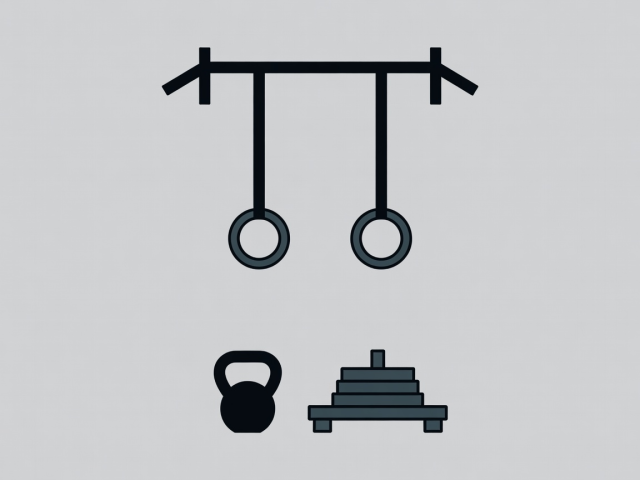
Calisthenics means training with body weight: push-ups, pull-ups, dips, squats and progressively harder skills such as the muscle-up, front lever and handstand. The roots are old. Muscle Beach in Santa Monica, California, drew crowds to outdoor gymnastics and acrobatics from the 1930s onwards.
The modern street workout movement spread through online video, and outdoor bar parks are now a familiar sight in many towns. Their attraction is low cost and visibility: beginners can watch others practise, ask how a skill is broken down and repeat it the following week. Gymnastic rings and low parallel bars called parallettes add variety for those training at home.
Progress in calisthenics is measured in skills as much as numbers, which suits people who find counting kilograms uninspiring.
Kettlebells, sandbags and carries
The kettlebell, a cast-iron ball with a handle, has a long history in Russia, where it was known as the girya. Its offset weight makes swings, cleans and get-ups train grip, hips and trunk together. Sandbags and farmers carries work in a similar way: awkward loads that resemble lifting shopping, children or garden supplies.
This style of training is often grouped under the label "functional fitness". CrossFit, founded by Greg Glassman in 2000, did much to popularise mixed strength-and-conditioning sessions in shared boxes, and many independent gyms now run classes in a comparable spirit without the brand.
Obstacle events as a training target
Obstacle course racing combines running with walls, ropes, monkey bars, mud and carries. Tough Mudder and Spartan Race both launched in the United States around 2010 and helped turn the format into a mass-participation event. Some are timed competitions; others encourage teamwork and treat finishing as the goal. For many people, an event on the calendar is the reason to start strength training at all.
Preparing for a first strength session
The UK Chief Medical Officers' physical activity guidelines suggest that adults do muscle-strengthening activity on at least two days a week. How that is done is a personal matter; the steps below simply describe what tends to make a first session go smoothly.
- Watch a class or an open session before joining, to see how the space and equipment are used.
- Ask staff or coaches to show the basic positions for any lift, carry or bar skill.
- Start with lighter loads and easier variations than you think you need.
- Leave time to cool down, and expect some muscle soreness in the following days.
- Book sessions with rest days in between, especially in the first weeks.
This is general information, not a training programme. Anyone with joint, back, heart or blood-pressure concerns should take advice from a GP or qualified professional before heavy or high-intensity training.
Related paths
Recovery habits: the lighter days that make harder sessions possible.
Outdoor movement: the running and loaded walking behind HYROX-style training.